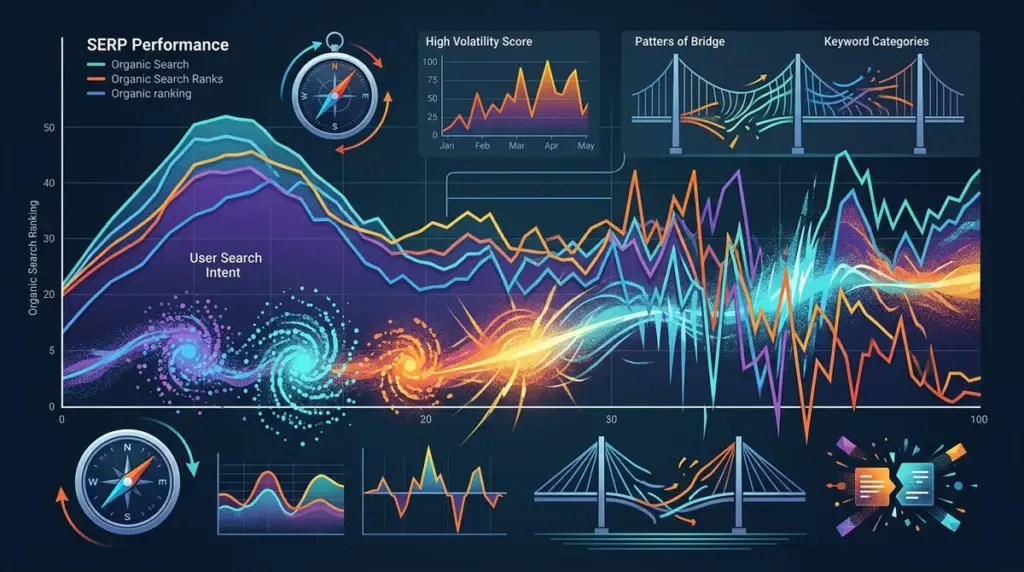
Ranking instability is rarely a result of a manual penalty or a sudden loss of domain authority. More often, it is the side effect of Google’s ongoing attempt to re-classify user intent for a specific query. When the SERP Sensor detects high volatility in a niche, it often signals that the algorithm is testing different content types—shifting from informational guides to transactional product grids, or vice versa—to see which satisfies the user faster. For SEO professionals, distinguishing between a technical ranking drop and an intent-driven shift is the difference between fixing a "broken" page and completely re-tooling a content strategy. This distinction becomes even more critical when considering how to go about detecting market-wide search instability early.
The Mechanics of Algorithmic Intent Re-Classification
Google’s understanding of a query is not static. Through models like BERT and MUM, the search engine constantly re-evaluates the "why" behind a search. If a keyword like "enterprise CRM" historically surfaced long-form comparison articles but suddenly begins displaying pricing pages and direct login portals, the intent has shifted from research to navigation or transaction. This creates massive volatility for sites that previously held the top spots with informational content. Understanding this dynamic helps clarify what search stability looks like across a site and why it's often elusive.
Key Indicator: Watch the SERP features. If the "People Also Ask" boxes vanish and are replaced by a "Products" grid or a local map pack, the underlying intent has been re-categorized. This is a structural change, not a performance issue on your site.
Identifying Intent Drift vs. Technical Performance Loss
When you see a sudden drop in the SERP Sensor data, the first instinct is to check Core Web Vitals or backlink health. However, if your technical metrics remain stable while your rankings fluctuate wildly, you are likely facing intent drift. This occurs when Google decides the "dominant intent" of a query has changed, or when the query becomes "multi-intent."
- Dominant Intent: The primary goal of most searchers (e.g., buying a specific model of shoe).
- Common Interpretations: Secondary goals (e.g., looking for reviews of that shoe).
- Minority Interpretations: Niche goals (e.g., looking for the history of the shoe brand).
If your content targets a "Common Interpretation" but Google decides to prioritize the "Dominant Intent" more heavily, your page will be pushed to the bottom of page one or onto page two, regardless of its quality. This creates a "glass ceiling" effect where no amount of backlink building will restore the previous position.
Quantifying SERP Feature Volatility
A stable SERP usually has a consistent set of features. High volatility often manifests as the rapid appearance and disappearance of specific modules. For example, if a "Video" carousel appears for a query that was previously all text, Google is signaling that users now prefer visual demonstrations. If your page lacks video, your ranking will remain unstable until you align with the new feature set.
Warning: Do not immediately rewrite content based on a 48-hour volatility spike. Google frequently "ghost tests" intent shifts by swapping result types for a small percentage of users. Only commit to a content pivot if the new SERP structure persists for more than seven to ten days.
The Three Stages of Intent-Driven Instability
Understanding the lifecycle of an intent shift allows agencies to manage client expectations. Instability usually follows a predictable pattern of sensing, testing, and settling.
1. The Testing Phase (High Volatility)
During this phase, the SERP Sensor will show extreme movement. You might see a blog post jump from position 3 to 15 and back to 5 within a week. Google is measuring click-through rates (CTR) and dwell time for different content formats to determine which one best satisfies the current user need.
2. The Feature Consolidation Phase
Once the algorithm identifies a preferred format, the SERP features stabilize, but the organic blue links may still shift. This is where Google determines which specific domains provide the best version of the newly preferred intent. If you see "How-to" schema appearing more frequently, it is a signal to update your structured data immediately.
3. The New Baseline
The volatility subsides, and a new ranking order is established. If you have not adapted your content to the new intent, you will find your site stuck at a lower baseline. At this point, the "instability" has ended, and you are simply misaligned with the market.
Calibrating Content to Sustained SERP Movements
To combat intent-driven instability, you must move faster than the standard quarterly content audit. Use the following steps to realign your pages when the sensor indicates a shift in your vertical:
Analyze the Top 3: Look at the pages that gained the most during the volatility. Are they shorter? More visual? Do they use different CTA types? If the winners are all "Best of" lists and you are running a "How-to" guide, your content type is the problem.
Check for Fragmented Intent: Sometimes Google cannot decide on a single intent. This results in a "fragmented" SERP where the top 10 is a mix of news, products, and guides. In these cases, the best strategy is to create a "hybrid" page that touches on multiple intent signals—adding a product comparison table to an informational guide, for example.
Monitor "At-Risk" Keywords: Keywords with high commercial value are the most prone to intent shifts as Google optimizes for ad revenue and user satisfaction. Use sensor data to flag these keywords for weekly review rather than monthly.
Strategic Response to Persistent Instability
If a keyword remains volatile for months, it is a sign of "unstable intent." This happens in rapidly evolving industries like AI software or crypto. In these niches, the user's needs change faster than the content can age. The only way to maintain rankings in an unstable environment is to maintain a high "update frequency." Refreshing your data, updating your screenshots, and refining your conclusions every 30 days tells the algorithm that your content is the most current response to a shifting query.
Frequently Asked Questions
How can I tell if a ranking drop is due to intent or a technical issue?
Check the SERP features. If the features (Maps, Images, Shopping) have changed, it is an intent shift. If the SERP features are identical but your site specifically dropped while competitors stayed put, it is likely a technical or authority issue specific to your domain.
Does high SERP volatility always mean an algorithm update is happening?
Not necessarily. High volatility can be localized to a specific industry or a small cluster of keywords. This usually indicates Google is refining the intent for that specific niche rather than changing the core algorithm across the entire web.
What should I do if my informational page is replaced by transactional results?
You have two choices: either pivot the existing page to include transactional elements (like product links or pricing) or create a new transactional page and use the informational page to drive internal traffic to it. Trying to force an informational page to rank for a transactional query is rarely successful.
How long does it take for a SERP to stabilize after an intent shift?
Most intent shifts stabilize within 10 to 14 days. However, during major core updates, this period of instability can last up to a month as Google recalibrates intent across billions of queries simultaneously.