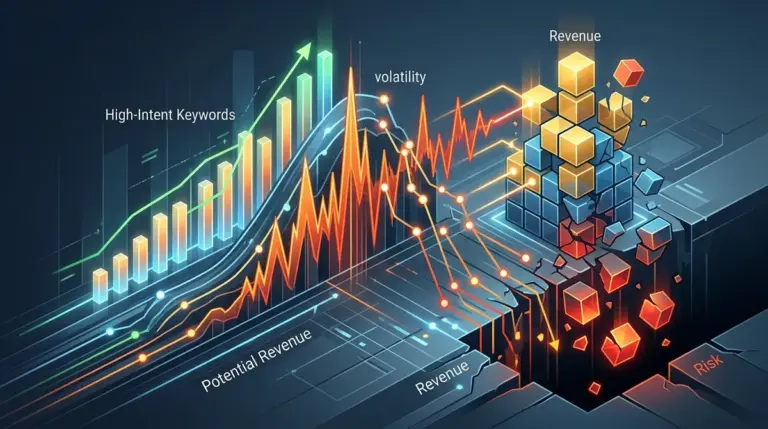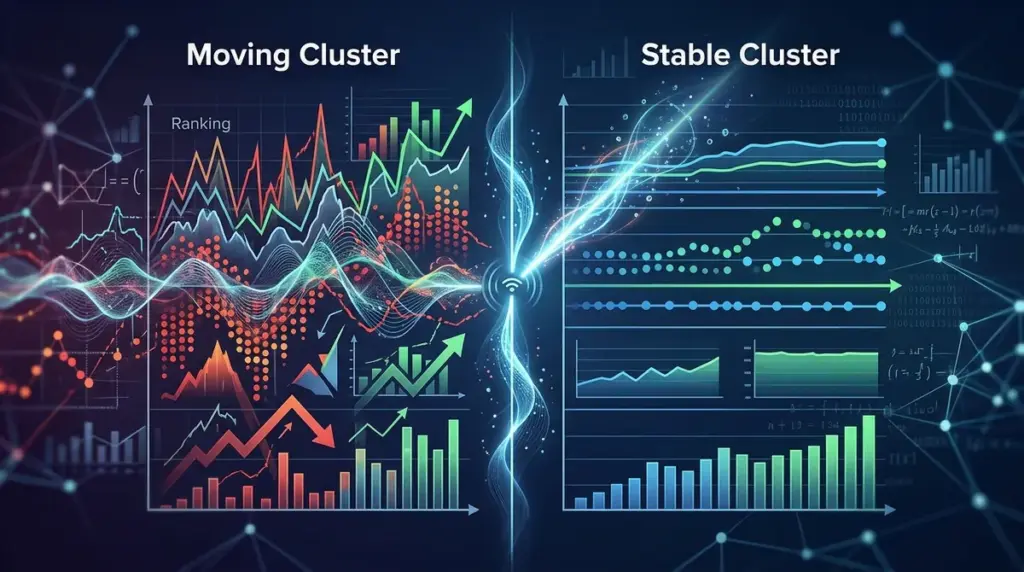
SEO performance is rarely uniform across a domain. A digital marketer might observe one keyword cluster—perhaps "enterprise cloud security"—maintaining static positions for months, while another cluster like "best productivity apps" fluctuates wildly every 24 hours. This divergence is not a glitch in tracking; it is a signal of how Google perceives the underlying intent, the competitive density, and the algorithmic "testing status" of specific vertical markets. Understanding why these clusters behave differently is the difference between strategic pivoting and wasted resources on unnecessary content refreshes. This divergence is not a glitch in tracking; it is a signal of how Google perceives the underlying intent, the competitive density, and the algorithmic testing status of specific vertical markets, offering clues about search intent changes.
The Mechanics of Intent Instability
The primary driver of cluster-specific volatility is intent fluidity. Google does not treat all queries with the same level of confidence. When a keyword cluster has "stable intent," it means the user's goal is fixed and the top-performing results satisfy that goal definitively. For example, "how to calculate ROI" has a fixed mathematical answer. The SERP for this cluster remains calm because the solution is evergreen.
Conversely, "fractured intent" occurs when Google is unsure if a user wants a product page, a comparison guide, or a news article. If a cluster is constantly moving, it is often because Google is rotating different content types to see which achieves a higher click-through rate (CTR) and dwell time. This is common in "Your Money or Your Life" (YMYL) categories where the algorithm frequently re-tests the authority of the ranking documents against new, emerging data points.
Query Deserved Freshness (QDF) and Seasonal Spikes
Clusters tied to news, tech releases, or seasonal trends trigger the QDF algorithm. When a cluster enters a QDF window, the historical authority of a page is temporarily deprioritized in favor of "newness." If you are tracking a cluster related to "AI regulations," you will see high volatility because the landscape changes weekly. A stable cluster, by contrast, usually lives in a "low-freshness" vertical where the 2022 answer is still the best answer in 2024.
Competitive Density and the Refresh Cycle
Volatility is often an external pressure rather than an internal content failure. In hyper-competitive niches, top-tier players are on a relentless content refresh cycle. If your competitors are updating their pages every 48 hours with new pricing, updated statistics, or fresh media, Google’s crawlers are forced to re-evaluate the SERP constantly.
Common triggers for cluster-wide movement include:
- Backlink Velocity: A sudden influx of high-authority links to a competitor’s cluster can cause a ripple effect, displacing everyone else in the top 10.
- SERP Feature Displacement: The introduction of a "People Also Ask" block or an AI-generated overview (SGE) can compress organic real estate, forcing sites to fight for fewer visible spots.
- Schema Updates: If a competitor implements Product or Review schema across a whole cluster, their improved CTR can signal to Google that they deserve a higher rank, causing a shift across the entire keyword set.
- Core Web Vitals Thresholds: Google may apply stricter performance requirements to specific high-traffic clusters, causing slower sites to oscillate at the bottom of page one.
Warning: Do not mistake temporary volatility for a penalty. If an entire cluster is moving in unison, it is likely an algorithmic re-evaluation or a competitor's site-wide update. Changing your on-page SEO during this "sensing" phase can prevent the algorithm from finding a baseline, leading to even greater instability.
The Impact of SERP Feature Testing
Sometimes the content isn't the problem; the layout is. Google uses specific clusters as sandboxes for new UI elements. You might notice that your "software reviews" cluster is volatile while your "software tutorials" cluster is stable. This is often because Google is testing different configurations of video carousels, sidebars, or sponsored snippets on review-heavy queries. Every time a new UI element is added, the pixel depth of organic results changes, which can lead to "rank jitter" as the algorithm calculates the new value of a position-one result that is now pushed below the fold.
Technical Volatility vs. Content Volatility
It is vital to distinguish between rank changes caused by content relevance and those caused by technical infrastructure. If a cluster is moving but the pages within it haven't been touched, look at the "instability signals" in the SERP itself. Is the average domain rating of the top 10 changing? Are the URLs shifting from deep internal pages to homepages? If the SERP is "shuffling" (the same 10 sites just swapping spots), it’s a sign of high competition. If the SERP is "churning" (new sites entering and leaving the top 10), it’s a sign that Google is dissatisfied with the current results and is looking for a new leader.
Strategies for Stabilizing Volatile Clusters
To manage a cluster that won't stay still, you must move beyond basic keyword targeting and address the signals Google is clearly seeking. If volatility is high, the algorithm is essentially "asking" for something the current results aren't providing. This might be more recent data, better mobile UX, or more direct answers to long-tail queries within the cluster.
First, analyze the "volatility leaders." Identify the one or two sites that remain stable while you and everyone else move. What is their content structure? Do they use more internal linking? Is their page load speed significantly higher? Often, stability is a reward for technical excellence and clear, unambiguous intent matching. Second, increase the internal link equity to the volatile cluster. By pointing more high-authority internal links to these pages, you provide a "stability anchor" that signals to Google that these pages are core pillars of your site’s architecture, not peripheral content.
FAQ
Why does my ranking change several times a day for some keywords?
This is often due to "Google Dance" or real-time testing. For high-volume or commercially sensitive keywords, Google may serve different versions of the SERP to different user segments to measure engagement. This results in rapid fluctuations in tracked rankings.
Can a stable cluster suddenly become volatile?
Yes. This usually happens during a Core Update or when a new, aggressive competitor enters the space. It can also happen if Google changes the "intent classification" of a cluster—for example, moving a cluster from "informational" to "transactional."
How do I know if volatility is an algorithm update or just "noise"?
Noise is usually limited to a few keywords. Algorithmic volatility affects entire clusters or categories across the web. If you see similar movement patterns across multiple sites in your niche, it is an algorithmic shift rather than an issue with your specific content.
Should I update my content every time a cluster becomes volatile?
No. Wait for the volatility to settle. If you update content during a period of high instability, you won't know if your changes helped or if you simply caught the tail end of an algorithmic adjustment. Monitor the signals for 7–14 days before making structural changes.