Local Rank Tracker: Track Rankings by City and Map Pack
A local rank tracker provides precise city-level and Map Pack performance insights, vital for businesses navigating competitive local SERPs.
SERP Sensor gives SEO teams a practical way to detect ranking fluctuations, monitor search-result changes, and understand when Google ranking volatility is isolated, page-specific, local, device-based, or market-wide. Spot unstable conditions earlier, separate noise from meaningful movement, and make cleaner SEO decisions when the SERP starts shifting.
When rankings change, the real question is whether the shift is temporary noise, a page-level issue, a local variation, or a wider search-result swing. SERP Sensor keeps that context attached.
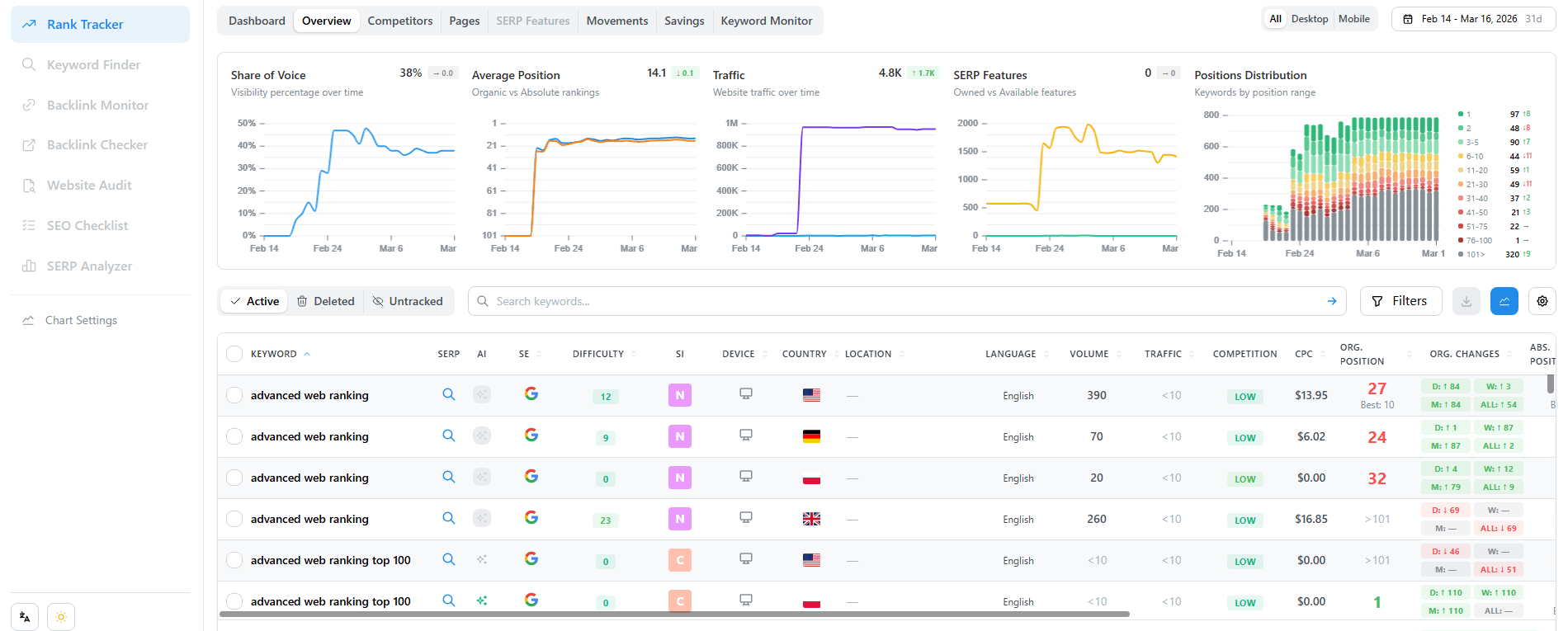
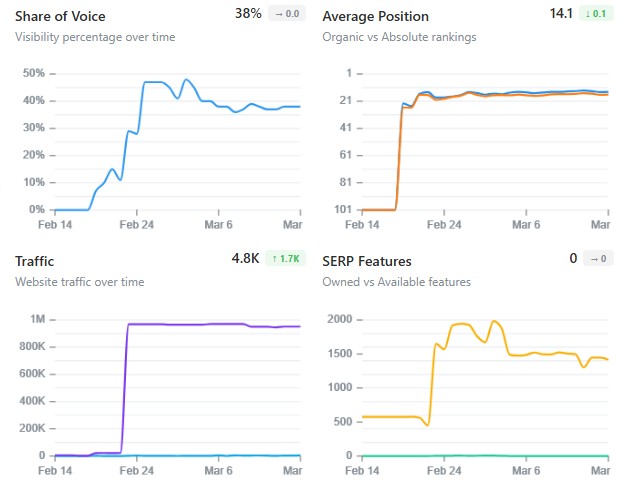
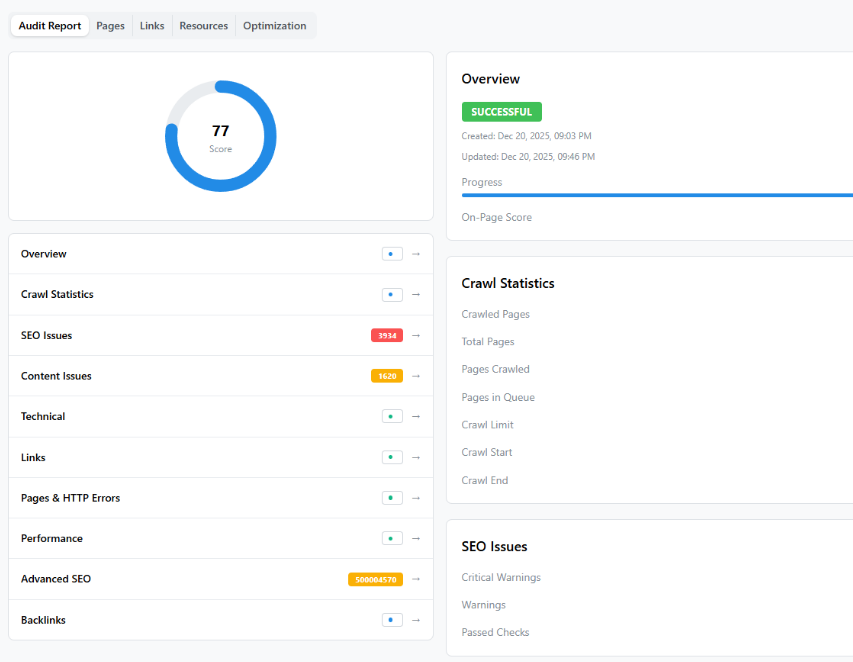
It offers real-time rank tracking, deep technical site audits, and AI search visibility metrics inside a highly intuitive dashboard.
SERP Sensor stays tightly focused on the signals behind ranking movement so teams can diagnose faster and respond more calmly.
Use a dedicated serp volatility checker to identify unusual search-result churn before it turns into rushed analysis and scattered decisions.
See when volatility is concentrated around specific landing pages, content groups, or intent patterns instead of assuming every drop is sitewide.
Separate desktop from mobile movement and uncover regional differences that can make rankings look inconsistent across teams and markets.
A ranking movement sensor is only useful if it helps teams avoid overreacting. Focus on repeatable patterns, not every temporary wobble.
Search results do not move in a straight line. Positions shift, pages rotate in and out, intent gets reinterpreted, local packs appear differently, and mobile results can behave nothing like desktop. A good serp sensor helps teams understand those changes as movement patterns rather than isolated numbers. That matters because not every ranking drop is a problem, and not every gain is a stable win.
When teams rely on snapshots alone, they often react too early or for the wrong reason. A temporary reshuffle can look like a content issue. A local change can look like a national one. A device-specific shift can get mistaken for a page-wide decline. SERP Sensor is built to reduce that confusion by acting as a focused serp volatility checker and search volatility tracker for people who need to know when the landscape itself is changing.
One of the biggest mistakes in SEO is treating all movement as equally meaningful. Search results are fluid by nature, but some periods are clearly more unstable than others. During those moments, positions can swing faster, result types can rotate more aggressively, and page visibility can become harder to interpret. A dedicated ranking volatility monitor helps you see whether the issue is your page, your competitors, or a wider shift in Google ranking behavior.
That distinction changes what happens next. If volatility is broad, the right move may be patience and observation. If movement is isolated to a page cluster, the next step may be intent review, internal linking adjustments, or content refinement. If the instability is local or device-based, you may need to investigate market-specific visibility rather than make broad site changes. SERP Sensor keeps the focus on those practical response paths.
SERP Sensor works as a serp changes monitor for teams that want clearer visibility into how rankings are behaving over time. Instead of treating every movement as a new emergency, it helps you identify patterns such as repeated swings, sudden reshuffles, page-specific instability, and search-result layouts that keep changing. That makes it easier to tell whether rankings are settling, drifting, or entering a more volatile phase.
For agencies, this means stronger client communication when positions become noisy. For in-house teams, it means fewer rushed conclusions after a turbulent week. For publishers and ecommerce teams, it means understanding whether product, category, and editorial pages are reacting differently under unstable SERP conditions. The value is not just in seeing movement. It is in reading the movement properly.
A useful search results volatility monitor should help you answer a small set of important questions quickly. Is the SERP broadly unstable or mostly calm? Are changes concentrated around a keyword set, a page type, or a specific intent pattern? Are mobile and desktop telling the same story? Are local results producing different outcomes by region? Is the ranking movement short-term churn or part of a wider trend?
Those questions are more useful than a generic graph because they point toward action. If instability is broad, you monitor. If movement is clustered, you investigate. If variation is local, you segment. If the pattern keeps repeating, you start looking for structural causes. SERP Sensor is positioned around that decision-making flow rather than around generic dashboard language.
Every search team has seen days when rankings jump around and then return to where they started. Those moments can waste hours if nobody knows whether the movement reflects real change. A dedicated serp fluctuation checker provides a cleaner read on whether the instability is broad enough to justify waiting or targeted enough to justify investigation.
This matters most when teams are balancing multiple priorities. Content teams need to know whether a drop is tied to relevance or just temporary SERP churn. Founders want to know whether visibility changes are a real business issue or a short-lived fluctuation. Agencies need to decide whether to escalate or contextualize. A focused volatility workflow gives everyone a steadier frame for interpreting what they are seeing.
Rankings rarely move in isolation. A keyword can drop because another page is being tested. A category can soften because result types changed. A local market can become unstable while national terms remain relatively calm. A reliable ranking movement sensor should help you connect those dots instead of flattening them into one average score.
SERP Sensor is built around that layered view. Teams can monitor broader volatility while still paying attention to page-level movement patterns, local variations, and device differences. That is especially useful when the same keyword set appears to tell different stories depending on where and how it is checked. The more precisely you can frame the movement, the better your next decision tends to be.
Many apparent ranking problems are really segmentation problems. Mobile can shift while desktop holds. One city can become unstable while another stays consistent. A local pack can change the visible landscape even when organic positions have not moved as much as they seem. Without segmentation, teams often misread these patterns and assume broad volatility where only partial variation exists.
That is why SERP Sensor keeps local and device-based interpretation close to the core experience. A modern search volatility tracker should not treat all rankings as if they come from one universal SERP. Search results are shaped by context, and volatility analysis needs to reflect that reality.
Google ranking volatility becomes easier to manage when teams stop treating every shift as a signal to intervene. Volatility does not always demand action. Sometimes it demands restraint, closer monitoring, and better segmentation. The point of SERP Sensor is to improve that judgment. It gives teams a more focused way to detect instability, review ranking movement, and decide whether the right response is to wait, investigate, or adjust.
That is especially valuable during uncertain periods when search results feel noisy and explanations are hard to pin down. Instead of relying on guesswork, teams can use a dedicated serp sensor to understand what is moving, how widely it is moving, and whether the pattern points to a temporary shake-up or a more meaningful shift in visibility.
SEO professionals can use SERP Sensor to interpret ranking swings without losing the broader picture. Agencies can use it to explain volatility to clients with more confidence. Content teams can use it to avoid rewriting pages during temporary search instability. Ecommerce teams can monitor category and product visibility during turbulent periods. Publishers can assess whether editorial movement reflects SERP churn or a stronger trend. Founders and website owners can get a clearer read on whether a visibility change needs immediate action or simply closer observation.
In each case, the goal is the same: make search-result movement easier to understand and easier to respond to. That is what a focused serp changes monitor should do.

Shorter diagnosis time, clearer client conversations, and fewer knee-jerk SEO changes.
"SERP Sensor helped us stop treating every drop like a crisis. We can now tell when rankings are moving because the whole SERP is unstable versus when a page actually needs attention."
"For agency reporting, the difference is clarity. Clients ask why rankings changed, and we can explain whether it looks like broad volatility, local variation, or a page-specific issue."
"We manage large content sections, so random movement used to trigger too many revisions. This gives us a cleaner read on whether the SERP is just reshuffling."
"The local and device views are what sold us. Some of our apparent ranking issues were really market-specific shifts, and that changed how we prioritized work."
Simple answers for teams evaluating SERP volatility monitoring and ranking movement analysis.
SERP Sensor is a focused tool for detecting and monitoring SERP volatility, ranking fluctuations, and search-result changes so teams can interpret movement with more context.
It helps you see whether rankings are shifting because of broad SERP instability, page-level changes, local variation, device differences, or repeated keyword movement patterns.
The focus is not broad rank tracking. It is understanding volatility, instability, and the meaning behind ranking movement when search results are changing.
Yes. SERP Sensor is designed to act as a serp volatility checker that helps you spot unstable search conditions and read them more clearly.
Yes. It helps teams monitor Google ranking volatility and judge whether a shift looks temporary, isolated, or part of a wider SERP change.
Because rankings can move differently by city, region, mobile, or desktop. Without that context, teams can mistake partial variation for a broader problem.
It is for SEO professionals, agencies, marketers, founders, content teams, ecommerce teams, publishers, and website owners who need clearer insight into search-result movement.
Yes. It helps you check whether the drop happened during wider SERP instability or whether the movement looks more specific to your pages or keywords.
It can help monitor keyword swings, page-level shifts, search-result churn, local variation, device-based differences, and broader volatility patterns.
Because volatility changes how ranking data should be interpreted. A dedicated tracker helps you avoid overreacting and make more disciplined SEO decisions.
Technical guides, ranking strategies, and expert guest posts.
A local rank tracker provides precise city-level and Map Pack performance insights, vital for businesses navigating competitive local SERPs.
Search rankings rarely move for one simple reason. A page can slip because the result set is unstable. A keyword cluster can surge because intent is being rebalanced. A local market can churn while national visibility looks mostly unchanged. Mobile can diverge from desktop just enough to create confusion inside reporting. SERP Sensor is built for those moments.
Instead of treating ranking checks like isolated scorekeeping, SERP Sensor gives teams a cleaner way to read movement. It works as a serp sensor, ranking volatility monitor, and search volatility tracker for people who need to understand not just what changed, but what kind of change they are looking at. That distinction matters because the right SEO response depends on whether the SERP is broadly unstable, narrowly shifting, or behaving differently across pages, locations, and devices.
One of the hardest parts of SEO is deciding when to act. If rankings dip during a volatile period, changing titles, content, or internal links too quickly can create more confusion than progress. If a page is quietly losing ground while the wider SERP stays stable, waiting too long can be just as costly. SERP Sensor helps teams make that call with more confidence.
By focusing on volatility, fluctuation patterns, and search-result change signals, the platform supports a more disciplined workflow. You can check whether movement is isolated or widespread, compare device behavior, review local differences, and identify whether a keyword set is experiencing temporary churn or a more meaningful shift. That makes SERP Sensor useful for agencies handling multiple clients, in-house teams managing large content libraries, ecommerce brands watching category pages, and publishers tracking editorial visibility under changing SERP conditions.
Plenty of tools can list rankings. Far fewer help you interpret unstable rankings properly. SERP Sensor is intentionally narrow in a good way. It is built around reading google ranking volatility, surfacing movement patterns, and helping teams decide whether to investigate, validate, segment, or simply continue monitoring.
That practical framing changes how teams work. A content lead can tell whether a drop happened during broad turbulence. An SEO manager can isolate page groups that are moving together. An agency strategist can explain volatility to a client without vague hand-waving. A founder can quickly understand whether a change likely reflects temporary SERP churn or a problem worth escalating. The value is clarity under uncertainty.
A broad marketing dashboard can bury the exact signal you need. SERP Sensor keeps the homepage promise simple: help users detect, understand, and monitor SERP volatility, ranking fluctuations, and search-result changes in a way that supports better action. It is not about trying to be everything. It is about giving SEO teams a sharper read on movement insight.
As a search results volatility monitor and serp changes monitor, SERP Sensor is especially useful when search behavior gets noisy. Teams can compare shifts by page, keyword grouping, location, and device, then decide whether the pattern suggests instability, intent movement, local variance, or a more durable visibility change. That means less guesswork, fewer rushed updates, and stronger search-performance decisions.
If your work depends on knowing whether rankings are truly changing or simply reacting to unstable conditions, SERP Sensor gives you a more focused lens. It helps you read the SERP as a moving environment, not just a static leaderboard. That is what makes it valuable as a serp volatility checker, ranking movement sensor, and day-to-day reference point for search teams that need cleaner movement insight.
When the SERP shifts, the goal is not to react faster at any cost. The goal is to react better. SERP Sensor helps you get there by turning volatility into something readable, explainable, and operationally useful.
From a quick serp volatility checker to deeper page-level movement views, every workflow stays centered on understanding what changed, where it changed, and how broadly the shift is spreading.
Track Google ranking turbulence with SERP Sensorβs Algorithm Weather Tracker....
Track competitor ranking turbulence with SERP Sensorβs Competitor Volatility Monitor....
Track daily ranking turbulence, spot unusual SERP instability, and see...
Track desktop search-result instability with a practical SERP volatility checker...
Track Google search-result instability with SERP Sensorβs Algorithm Volatility Checker....
Track keyword ranking turbulence with SERP Sensorβs keyword position volatility...
Use SERP Sensor to monitor search volatility, compare movement patterns, and respond with more confidence when rankings get unstable.